
Walk into most office lobbies and you’ll see the same thing: a logo on the wall behind the reception desk, maybe a framed set of values nobody reads, and a whole lot of empty drywall. It’s fine. It’s also a missed opportunity.
The space your employees, clients, and recruits move through every day is one of the most persuasive branding tools you own, and most companies leave it blank. Custom wall coverings change that.
Done well, environmental branding turns a hallway into a story, a stairwell into a statement, and a conference room into a space people remember. Here’s how large-format wall graphics work, where they make the biggest impact, and what to think about before you commit a single square foot.
What “Environmental Branding” Actually Means
Environmental branding is the practice of designing a physical space so that it communicates who you are the moment someone steps inside. It’s the difference between a company that tells visitors it’s innovative and one that shows them through the space itself.
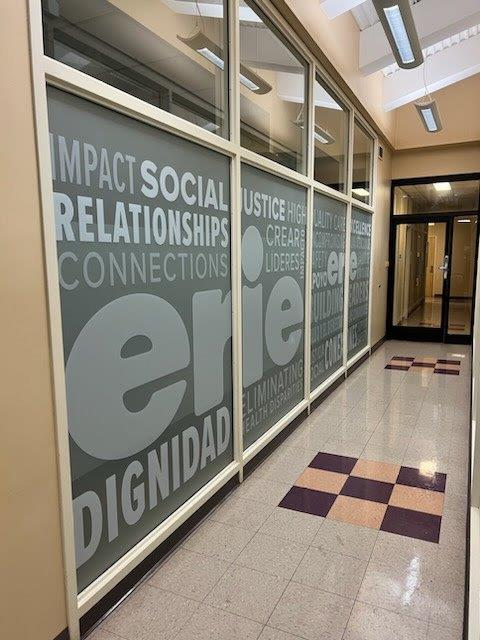
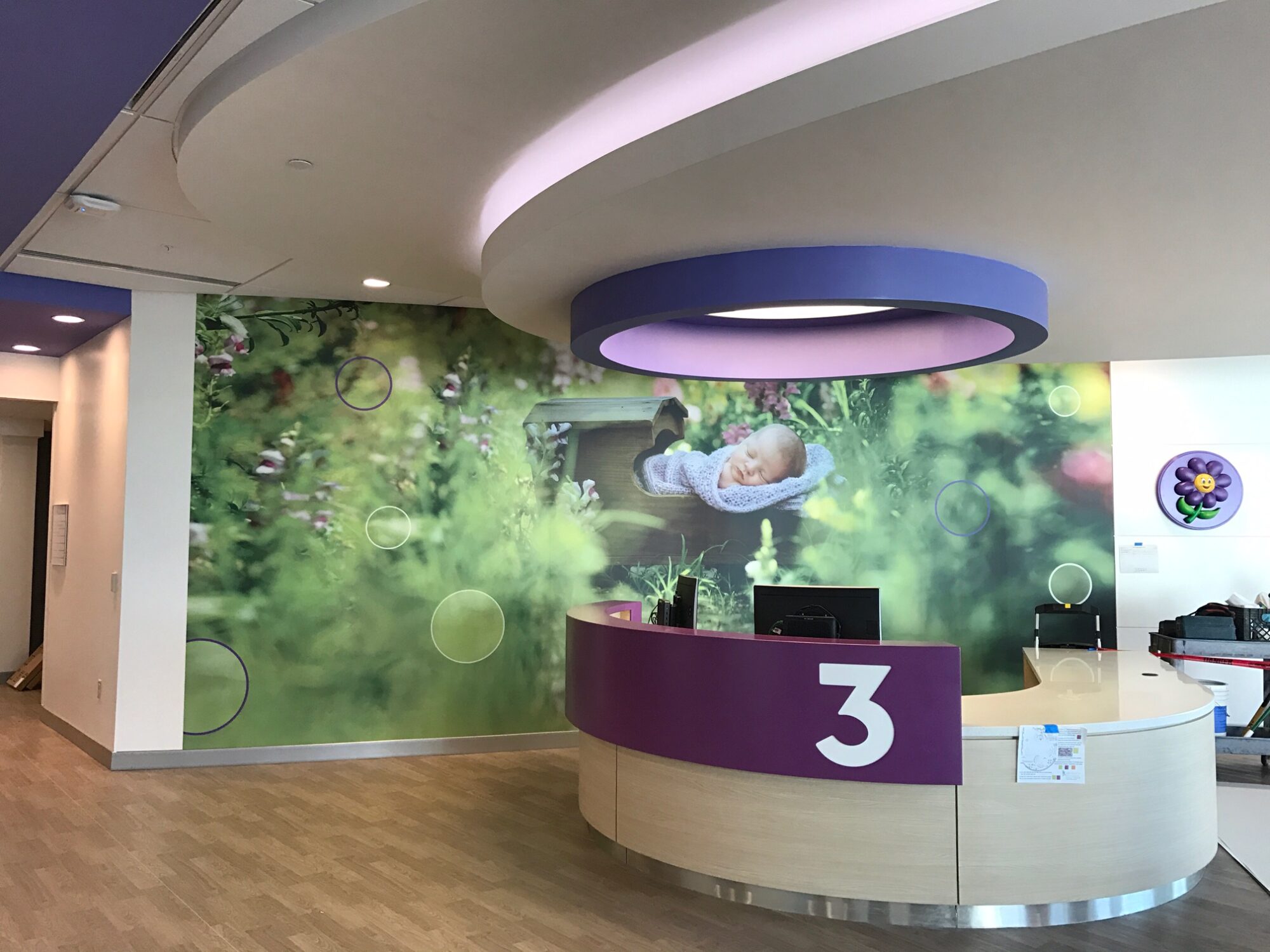
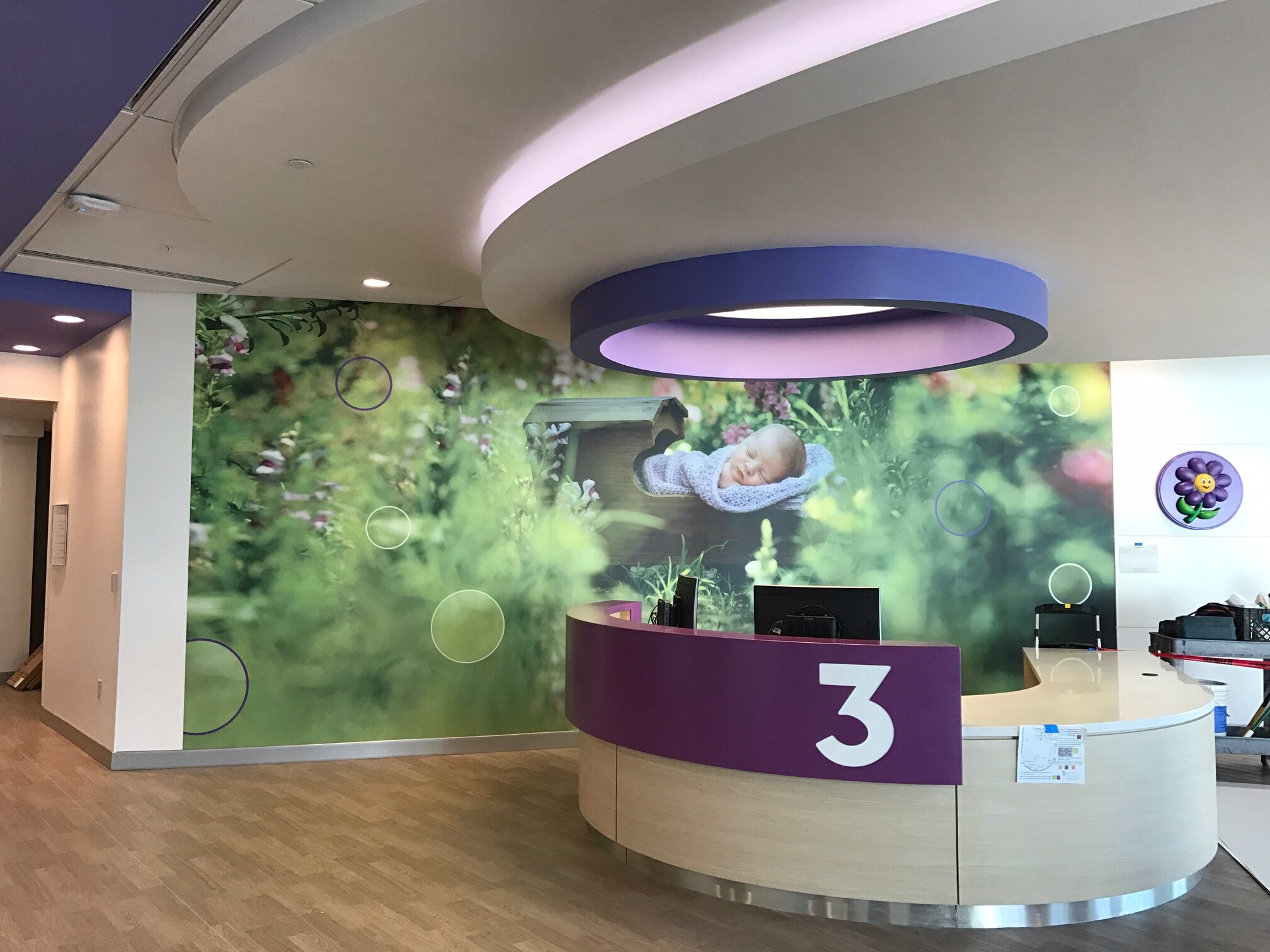
Custom wall coverings are the backbone of that approach. Using large-format printing, a graphic is produced at full architectural scale and applied directly to a wall, a glass partition, a stairwell, or a column.
The result reads as part of the building rather than a poster stuck on top of it. When the print quality is high, sharp detail, rich color saturation, seamless coverage across a wide surface- the effect is immersive rather than decorative.
This is where print quality separates a forgettable job from a showpiece. A photographic mural blown up to twelve feet wide will expose every flaw in a low-resolution file or a cut-rate printer.
The best installations start with proper file preparation and a printing process built to hold detail at scale, so the image looks as crisp across an entire wall as it would in your hand.
Where Wall Coverings Make the Biggest Impact
Not every wall needs graphics. The trick is choosing the surfaces where a visitor’s attention naturally lands and where the message does the most work.
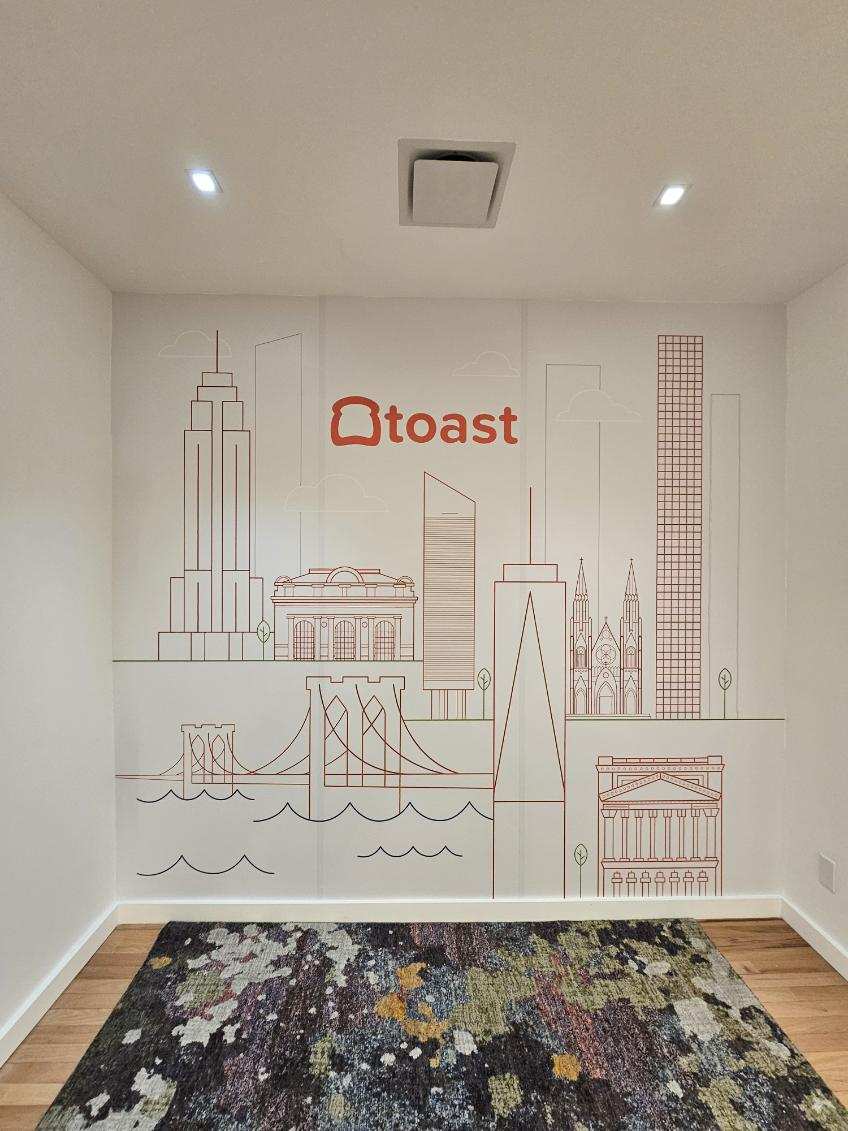
The reception and lobby area – This is your first impression, and you only get one. A full-wall installation behind the front desk sets the tone before anyone shakes a hand. It’s also the most-photographed spot in most offices, which means it quietly shows up in social posts, press photos, and candidate walkthroughs.
Hallways and transition spaces – long corridors are usually dead zones. They’re perfect canvases for timelines, product stories, or oversized imagery that gives people something to absorb as they move through the building. A “history wall” or a milestone timeline turns wasted square footage into a narrative.
Conference and meeting rooms – Branded meeting spaces reinforce your identity during the exact moments you’re trying to win trust, client pitches, board meetings, interviews. Themed rooms also solve a practical problem: they give people an easy, memorable way to refer to spaces (“let’s meet in the Skyline Room”).
Stairwells and columns – Architectural oddities that designers usually apologize for become features when they’re wrapped in graphics. A stairwell mural encourages people to take the stairs; a wrapped column anchors an open floor plan.
Glasses and windows – Frosted or printed window graphics add privacy to where you need it while carrying your brand and, in many cases, satisfying building codes for glass visibility. It’s one of the most versatile, and underused, surfaces in any office.
If your exhibit needs to compete in a crowded convention hall, ladder light systems provide outstanding visibility and help your messaging stand out from every angle.
The Payoff: Culture, Recruiting, and Client Trust
The case for environmental branding isn’t just aesthetic. There are real, measurable reasons companies invest in it.
It shapes culture – Employees spend a huge share of their waking lives inside your walls. Space that reflects the company’s mission and personality reinforces belonging in a way an all-hands email never will. It’s a daily, ambient reminder of what the team is building.
It’s a recruiting advantage – Candidates form impressions fast, and much of that judgment happens before the first interview question. A workplace that looks intentional and alive signals a company that’s confident and well-run. In a competitive hiring market, the physical environment is part of your pitch.
It builds client trust – When a prospect visits your office and the space is polished, cohesive, and clearly yours, it signals that you sweat the details, and details are exactly what clients are paying for. A strong environment closes some of the gaps between “interested” and “sold” before the meeting even starts.
It’s remarkably cost-efficient – Compared to full renovation, custom wall graphics deliver a dramatic transformation for a fraction of the cost and disruption. And because the structure stays put, refreshing the look later can be as simple as swapping the graphic.
What to Think About Before You Print
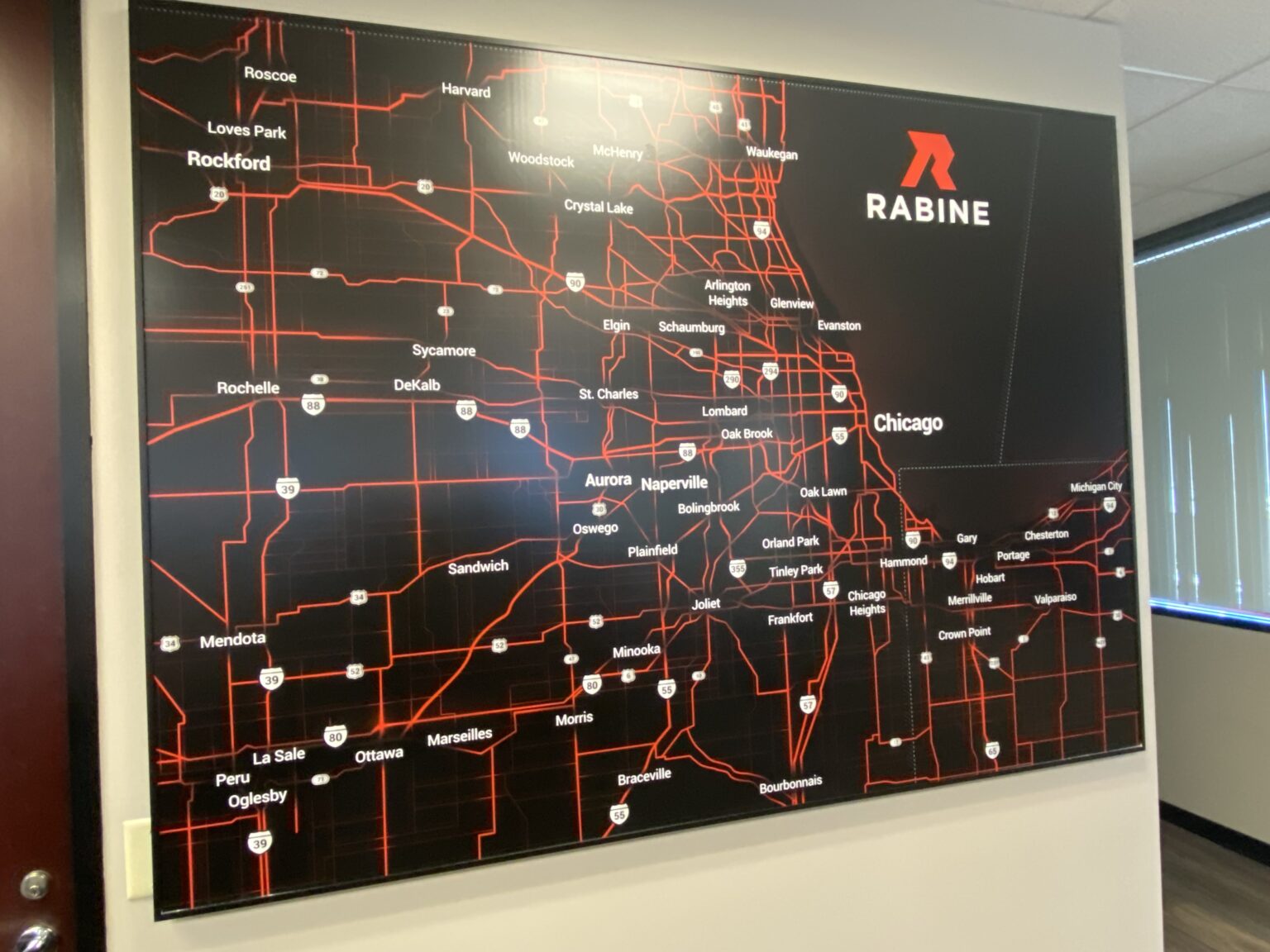
A great installation is equal parts design, material science, and logistics. A few things worth sorting out early:
Surface matters – Smooth painted drywall, textured plaster, glass, and brick each behave differently with adhesives. The right material and finishing depend on where the graphic is going, how long it needs to last, and whether it will ever need to come down cleanly. This is a conversation to have before design, not after.
File quality is non-negotiable – Large-format printing is unforgiving of low-resolution artwork. Starting with properly prepared, high-resolution files is the single biggest factor in whether a finished wall looks premium or pixelated. A printer worth working with will review your files up front and flag problems before anything hits the wall.
Finishing changes the feeling – Matte finishes reduce glare and read as understated and sophisticated, ideal for spaces with a lot of ambient light. Gloss and satin finishes make colors pop and suit bold, high-energy graphics. The finish should match both the lighting and the mood you’re going for.
Installation is where projects succeed or fail – Even a beautifully printed graphic can be ruined by bubbles, misalignment, or seams in the wrong place. Professional installation, with crews who measure, prep, and apply correctly the first time, protects the investment and keeps your office running while the work happens.
Plan for change – Brands evolve, campaigns rotate, and offices reconfigure. Building in the ability to update or replace graphics down the road keeps the space feeling current without starting from scratch each time.
Turning Blank Walls into Your Best Brand Asset
The most convincing thing about environmental branding is how obvious it feels once it’s done. A space that used to be background becomes something people notice, mention, and remember. Employees feel it. Clients feel it. Candidates feel it. And unlike an ad campaign that ends, a well-made wall keeps working every single day.
If you’ve got blank walls that could be doing more, the process is more approachable than most people expect, it starts with a look at your space, your goals, and your files, and a conversation about what’s possible.
Ready to see what your walls could say? Request a Quote or call 847-290-0002 to speak with the Benchmark Imaging team and discuss your project and space requirements. With decades of large-format printing expertise, an eye for quality that goes back to our photo-lab roots, and full-service design and installation, we’ll help you turn ordinary square footage into a brand experience, delivered on time and on budget.